
What Is No Cost Venue Sourcing and How Does It Actually Work?
No cost venue sourcing is a service that helps organizations find, compare, and secure the right hotel or meeting venue without charging the client a sourcing fee. Instead, venues compensate the sourcing partner as part of their standard sales and marketing expense. For clients, that means access to expert support from search to signature without adding another line item to the event budget.
It sounds simple, but many planners, procurement teams, and internal stakeholders still pause at the same question: if the service is no cost to the client, how does it actually work? That question matters because trust matters. When budgets are tight and contracts carry real risk, buyers want to understand who is involved, how decisions are made, and whether outside support changes the economics of the deal.
At Thallo Events, transparency comes first. Venues compensate us as a standard marketing expense, not by inflating your rates. You get a dedicated expert from search to signature, without a sourcing fee. The value is not just in finding options. It is in saving time, reducing internal workload, and helping your team make better decisions with more clarity.

What does no cost venue sourcing mean?
No cost venue sourcing means the client does not pay the sourcing partner directly for identifying venue options, collecting proposals, organizing comparisons, and supporting the selection process. The service is designed to make the venue search more efficient while giving the client access to market knowledge and a more structured evaluation process.
In practical terms, this means a corporate team, association, or independent planner can share meeting requirements with a sourcing expert and receive support with:
venue research
RFP distribution
proposal collection
side by side comparison
follow-up with hotel sales teams
timeline management
guidance through contracting
The “no cost” part refers to the client relationship. It does not mean low-value support or limited involvement. In the right model, it means the buyer gets an expert advocate without paying a separate sourcing fee.
For many organizations, that matters because venue sourcing is rarely just a simple search. It often involves multiple cities, room block strategy, food and beverage commitments, meeting space needs, timing constraints, stakeholder approvals, and contract questions that can slow down the process if no one is coordinating the details.
Who pays for no cost venue sourcing?
This is the question most people ask first, and they should.
In a no cost venue sourcing model, the venue pays the sourcing partner after the event is contracted, based on the venue’s established commission structure or marketing budget. This compensation comes from the venue side, not the client side.
That is why transparency is essential. Clients should always understand how the model works, when compensation occurs, and what role the sourcing partner plays in the process.
At Thallo Events, we are clear about this from the start: venues compensate us as a standard marketing expense, not by inflating your rates. Our role is to support the buyer with a more efficient search and stronger decision-making process, while helping venues connect with qualified business opportunities.
This is not unusual in the meetings and hospitality industry. What matters is whether the sourcing partner stays aligned with the client’s goals, communicates clearly, and helps the client assess fit, value, and risk, rather than simply forwarding a list of hotels.
Does no cost venue sourcing increase hotel rates?
This is one of the biggest objections in the market, and it deserves a direct answer.
No, no cost venue sourcing does not automatically increase hotel rates. A reputable sourcing partner is not adding a fee on top of the client’s rate. The venue compensation is part of the hotel’s normal cost of sales and marketing.
The more important issue is not whether a sourcing partner is involved. It is whether your organization has a disciplined process for evaluating total value. Room rate alone does not tell the full story. Concessions, attrition terms, cancellation language, meeting space rental, food and beverage minimums, resort fees, rebate structures, and complimentary ratios can all affect the true cost of a program.
That is where expert support becomes useful. A strong sourcing partner helps clients look beyond the headline rate and compare proposals in context. In many cases, that leads to better value, not higher cost, because the buyer has a clearer basis for comparison and a stronger process for follow-up.
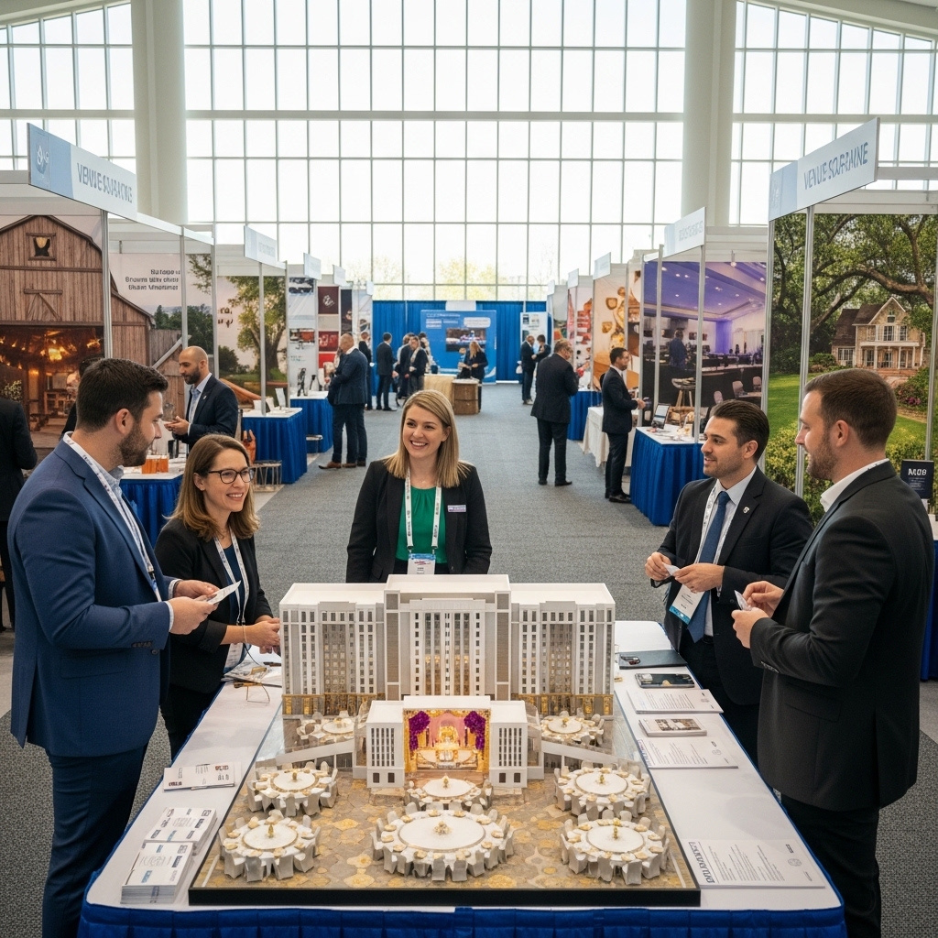
How does the venue sourcing process actually work?
The process is usually more structured than many organizations expect. While every event has different needs, the core steps are straightforward.
1. Discovery and requirements gathering
The process starts with understanding the event. This includes dates, destination preferences, attendee count, sleeping room needs, meeting space setup, food and beverage expectations, budget parameters, accessibility needs, and internal priorities.
This stage matters because a vague brief often leads to weak proposals. A clear sourcing strategy helps hotels respond more accurately and makes comparisons easier later.
2. Market research and hotel outreach
Once requirements are clear, the sourcing partner identifies suitable properties and distributes the RFP. This is where market knowledge matters. Not every hotel that looks good online is the right operational fit. Brand, layout, service level, renovation status, responsiveness, and historical performance can all influence whether a property should be included.
3. Proposal collection and comparison
When proposals come back, the sourcing partner organizes them into a format the client can actually use. This step is often one of the biggest time-savers for internal teams. Instead of sorting through inconsistent responses, the client gets a clearer view of rates, concessions, terms, and tradeoffs.
4. Follow-up and clarification
Hotels often leave important details unclear in the first round. A strong sourcing partner follows up to clarify pricing assumptions, space allocations, cutoff dates, deposit schedules, and other items that affect decision-making.
5. Shortlist support
Once the field narrows, the sourcing partner helps the client evaluate top options based on the event’s priorities, not just the lowest quoted rate. This can include reviewing strengths, concerns, hidden costs, and operational fit.
6. Contract transition and negotiation support
Venue sourcing should not stop at selection. The contract stage is where risk often becomes visible. Attrition, cancellation, force majeure, indemnification, and resell language all deserve careful review. This is also where coordination between sourcing and negotiation can create a smoother path to signature.
For clients who need more than a venue list, this is where expert support becomes especially valuable.
Why do organizations use a venue sourcing partner?
Most teams do not need help because they cannot send an RFP. They need help because the venue search takes more time, coordination, and expertise than their internal bandwidth allows.
A venue sourcing partner can help when:
internal teams are stretched thin
the event is high value or high visibility
multiple stakeholders need to approve the decision
proposals are difficult to compare
the timeline is tight
contract terms require closer attention
the team wants a more efficient process from start to finish
For corporate teams and associations, the value is often operational. The sourcing process becomes more organized, the internal workload becomes lighter, and decision-makers receive clearer information.
For planners, the value is both strategic and practical. They get support managing hotel communication, evaluating tradeoffs, and keeping the process moving.
What should you look for in a venue sourcing partner?
Not all sourcing support is equal. If you are evaluating whether to work with a partner, ask questions that reveal how they actually work.
Transparency
A good partner should explain how they are compensated and what their role includes. This should never feel vague.
Process clarity
You should understand what happens from discovery through contracting, what you will receive, and how decisions will be supported.
Buyer alignment
The sourcing partner should focus on your priorities, not just hotel availability. That means understanding budget, risk tolerance, attendee experience, and internal approval needs.
Contract awareness
Even when sourcing is the primary service, contract implications should not be treated as an afterthought. Risk hides in attrition, cancellation, and liability language.
Experience
Experience matters because venue decisions are rarely one-dimensional. A partner who understands both hotel sales behavior and buyer concerns can help your team ask better questions and avoid preventable mistakes.
That is one reason clients value working with experts who understand the full path from search to signature.
Is no cost venue sourcing right for every event?
Not every event needs outside support, but many benefit from it.
If your event is simple, low risk, and already covered by a strong internal process, you may not need a sourcing partner. But if your team is balancing multiple priorities, evaluating unfamiliar destinations, managing stakeholder pressure, or trying to reduce contracting risk, no cost venue sourcing can create real value.
The key is choosing a partner whose process is transparent and whose guidance is grounded in buyer needs.
For many organizations, the question is not whether they can source a venue on their own. It is whether doing it alone is the best use of time and internal resources.
Common misconceptions about no cost venue sourcing
“If the client is not paying, the advice cannot be objective.”
Objectivity comes from process, transparency, and alignment. A strong sourcing partner earns trust by helping the client evaluate options clearly and make informed choices.
“Hotels just build the cost into the rate.”
Venues compensate sourcing partners through normal sales and marketing structures. That is different from adding a separate fee to your agreement. The bigger financial question is whether your team is comparing total value accurately.
“Our legal team reviews contracts, so we do not need sourcing support.”
Legal review is important, but venue sourcing serves a different purpose. It helps organize the search, assess proposals, reduce internal workload, and improve the path to a better decision. In many cases, sourcing and contract expertise work best together.
“We can just use online venue search tools.”
Directories can be useful, but they do not replace a guided process. They do not clarify vague proposals, pressure test value, or help manage the full path through selection and contracting.

Why transparency matters more than ever
Buyers are more careful than ever about how vendors are paid, how recommendations are made, and where risk sits in the process. That is a good thing. It leads to better questions and better partnerships.
A transparent venue sourcing model gives clients confidence in three areas:
how compensation works
what support is included
how decisions will be evaluated
When those three areas are clear, trust grows. And when trust grows, the sourcing process becomes more productive.
That is especially important when contracting follows close behind the search. A good venue decision is not just about location or rate. It is about operational fit, financial clarity, and terms the client can live with.
For a deeper look at contract risk, read our post on [what event planners should watch for in hotel attrition and cancellation clauses] and our guide to [what is negotiable in a hotel contract for meetings and events]. These topics often become relevant the moment a venue is selected.
Final thought
No cost venue sourcing works because it gives buyers expert support without adding a sourcing fee to the client relationship. When the model is transparent and the process is disciplined, it can reduce workload, improve comparisons, and support better decisions from search to signature.
The most important factor is not whether a sourcing partner is involved. It is whether the partner is clear, experienced, and aligned with your goals.
If your team is evaluating venues and wants a more efficient, transparent path forward, the right support can make the process easier to manage and easier to trust.
FAQs
What is no cost venue sourcing?
No cost venue sourcing is a service where a venue sourcing partner helps clients find and compare hotels or meeting venues without charging the client a sourcing fee. The venue compensates the sourcing partner through its normal sales or marketing budget.
Who pays for venue sourcing services?
In a no cost model, the venue pays the sourcing partner after the business is contracted. The client does not pay a separate sourcing fee.
Does using a venue sourcing company raise my hotel rate?
Not inherently. Venue compensation is generally part of the hotel’s normal cost of sales. A good sourcing partner helps clients assess full value, not just the headline room rate.
Is no cost venue sourcing only for large events?
No. It can be helpful for a range of event sizes, especially when teams need support with research, proposal comparison, or stakeholder coordination.
What is the difference between venue sourcing and contract negotiation?
Venue sourcing focuses on identifying and comparing suitable hotel or meeting options. Contract negotiation focuses on the business and risk terms in the agreement, including items like attrition, cancellation, liability, and concessions.
Final Thoughts
No cost venue sourcing works because it gives buyers expert support without adding a sourcing fee to the client relationship. When the model is transparent and the process is disciplined, it can reduce workload, improve comparisons, and support better decisions from search to signature. To learn more about how Thallo Events supports clients through venue sourcing and contract strategy, visit thalloevents.com.